Top 7 Documents required to respond Tax Notice 2026
The single biggest reason a notice reply drags on for weeks instead of days is not the tax issue itself, it is scrambling for documents after the notice has already arrived. In my seven years of helping people through this process, the ones who reply fastest and cleanest are the ones who pull together the same handful of documents before they even start typing a response. Here are the 7 Documents required to respond Tax Notice for FY 2025-26, kept ready before you even open the reply form, and why each one matters.
1. The Notice Itself, With Its DIN
Every valid communication from the Income Tax Department carries a Document Identification Number, or DIN. Before you do anything else, check that the notice has one and note it down, along with the section under which it was issued and the response deadline. A notice without a valid DIN is not legally valid, and confirming this early saves you from responding to something that may not require a response at all. Keep the PDF or the physical copy accessible throughout the process, since you will reference the exact wording repeatedly.
2. PAN and Aadhaar
Basic, but easy to overlook when you are focused on the substance of the notice. Most e-Proceedings submissions and any physical correspondence will ask you to confirm your PAN and, in several cases, your Aadhaar-linked details. Keep clear scanned copies ready before you log into the portal.
3. Form 130 (Form 16) and Form 16A From Every Deductor That Year
If the notice relates to a salary mismatch, TDS discrepancy, or income you may have missed, your Form 130, still commonly called Form 16, from every employer you worked for in the relevant year is essential. If you had other income with TDS deducted, such as interest or professional fees, pull the corresponding Form 16A from each deductor as well. A notice frequently traces back to a mismatch between what one of these forms shows and what your return declared.
4. Form 168 (Form 26AS), AIS, and TIS
These three, downloaded fresh from the income tax portal rather than relying on an old copy, are the department’s own record of your income, TDS, and reported transactions. Most notices today are triggered by an AIS mismatch, meaning the department’s data does not line up with what you filed. Comparing your return against a current copy of Form 168, AIS, and TIS is usually the fastest way to identify exactly which figure is being questioned. I have covered how these three documents relate to each other in my guide to reading Form 26AS and AIS.
5. Your Filed ITR and the Acknowledgment (ITR-V)
Keep a copy of the exact return you filed for the year in question, along with the ITR-V acknowledgment confirming it was verified. You will need to reference specific figures and schedules from this return directly in your reply, and having it open alongside the notice avoids the kind of small transcription errors that can trigger a follow-up query of their own.
6. Bank and Demat Statements for the Relevant Year
For notices involving high-value transactions, cash deposits, interest income, or capital gains, your bank and demat statements for the full financial year are the primary evidence you will lean on. Download these directly from your bank or broker rather than relying on old saved copies, since you may need transaction-level detail that a summary statement does not show.
7. Investment, Deduction, and Transaction Proofs
If the notice questions a deduction you claimed, this is where the evidence lives: Section 80C investment receipts, your 80D health insurance premium payment proof, your home loan interest certificate, rent receipts if you claimed HRA, and, if capital gains are involved, your broker’s capital gains statement or the property sale deed. Gather only what is relevant to the specific query in the notice rather than everything you have ever claimed, since a focused reply with exactly the right proof is far more effective than an overwhelming stack of paperwork.
Why These Documents to Respond to a Tax Notice Save You Time
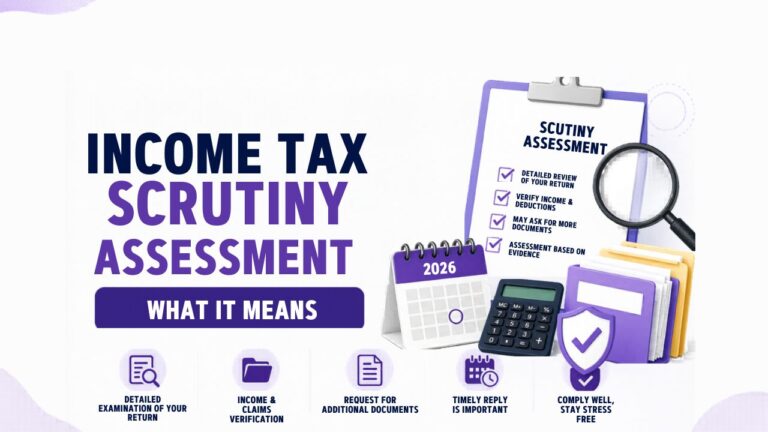
Most notice deadlines run 15 to 30 days from issue, and that window disappears quickly if you are requesting duplicate Form 16 copies from an old employer or waiting on a bank statement download in the final week. Pulling all seven documents together on day one, even before you have fully worked out your response strategy, means you are never blocked on paperwork when it comes time to actually reply through e-Proceedings. For the section-by-section detail on how to respond once your documents are ready, see my best response to income tax notice guide, and if you want to understand why the notice arrived in the first place, my top reasons for income tax notice article covers the most common triggers.
Conclusion
These 7 documents required to respond tax notice cover almost every scenario a salaried taxpayer or freelancer is likely to face, from a simple TDS mismatch to a full scrutiny assessment. Keep digital copies of all seven organised in one folder every filing season, not just after a notice arrives, and you will cut your response time down from weeks to days when one eventually does. For the complete picture of staying compliant year-round, start with my complete income tax guide for India.
Frequently Asked Questions
What if I no longer have Form 16 from an old employer?
Your Form 168, AIS, and payslips can usually substitute for a missing Form 16 in a pinch, since the TDS figures reported by the employer will still show up there. It is still worth emailing the employer’s payroll or HR team for a duplicate copy if you have time before the deadline.
Do I need to submit all seven documents for every notice?
No. Only submit what is directly relevant to the specific query raised in your notice. The point of gathering all the documents to respond to a tax notice in advance is simply that you are never scrambling to locate something once you know exactly what the notice is asking for.
Where do I actually upload these documents?
Most notices are responded to through the e-Proceedings section of the income tax e-filing portal, where you can view the notice, submit your reply, and attach supporting documents directly against that specific notice.
Should I hire a CA before gathering these documents, or after?
Gather the documents first regardless. Having everything organised makes the conversation with a CA far more efficient if you do decide to bring one in, and for straightforward mismatches you may find you do not need one at all once the documents are in front of you.