Best Response to Income Tax Notice: Section-wise Guide 2026
Your phone buzzes with an SMS that starts with “Notice issued by CPC/AO under section…” and before you have even finished reading it, your stomach drops a little. I get calls about this almost every week once assessments pick up pace. The first thing I tell people is this: not every income tax notice is bad news. Some just confirm your return has been processed. Others need a careful, timely reply. How you best response to income tax notice in 2026 depends entirely on which section it is issued under, and that is exactly what this guide walks you through, section by section.
What an Income Tax Notice Really Means
A notice is simply a written communication from the Income Tax Department, either from the Centralised Processing Centre (CPC), a jurisdictional Assessing Officer, or the faceless assessment units. It always cites a specific section of the Income Tax Act 1961, and it always carries a Document Identification Number (DIN). The section quoted tells you exactly what the department wants from you, so the very first thing to check on any notice is that section number.
For a complete walkthrough of how income tax works in India, I have covered the full picture in my complete income tax guide. This article focuses specifically on what to do once a notice actually lands in your inbox.
First Thing to Do: Confirm the Notice Is Genuine
Since October 2019, every genuine communication from the department carries a unique DIN. If a notice does not have one, it is treated as invalid and you do not need to respond to it at all.
Before you do anything else, go to the income tax e-filing portal and use the “Authenticate Notice/Order Issued by ITD” service under Quick Links. You can verify it either with your PAN, document type, assessment year and date of issue, or directly with the DIN printed on the notice. Either way, you will get an OTP on your mobile and an instant confirmation. This takes three minutes and saves you from acting on a phishing attempt dressed up as a tax notice.
Once confirmed genuine, log in and check Pending Actions, then e-Proceedings. This is where the actual notice, the reason for it, and the response window will be listed.
Section-Wise Guide: What Each Notice Means and How to Respond
Section 143(1): Intimation After Your Return Is Processed
This is the most common communication you will ever get, and technically the Act calls it an intimation, not a notice. It is generated automatically once your ITR is processed, and CPC must send it within nine months from the end of the financial year in which you filed your return.
It will show one of three outcomes: no discrepancy, a refund due, or a proposed adjustment that increases your tax. If there is a mismatch, you get thirty days to agree or disagree with it through e-Proceedings before it is finalised.
Ramesh, one of the salaried professionals I work with, claimed an HRA exemption of Rs. 50,000 under the old regime without adequate rent receipts to support it. CPC disallowed it in his 143(1) intimation. He fell in the 20 percent slab, so the additional tax worked out to Rs. 10,000, plus 4 percent health and education cess of Rs. 400, taking his total demand to Rs. 10,400. He paid it through the portal within the window given and the matter closed there.
Section 139(9): Defective Return Notice
This means your return was accepted for filing but has an internal error or inconsistency that needs fixing. Common triggers are using the wrong ITR form, missing a required schedule, or a mismatch between your total income and the income reported under individual heads.
You get fifteen days to file a corrected return, and this can be extended if you write to the Assessing Officer with a genuine reason before the deadline passes.
Sunita, a salaried employee who also did freelance content writing on the side, filed ITR-1 covering only her salary. Since freelance income needs to be reported as business or professional income, her return was flagged as defective and she had to refile using the correct form. If you are ever unsure which form applies to your income mix, my guide on which ITR form to file for FY 2025-26 walks through this in detail.
Section 142(1): Inquiry Before Assessment
This notice asks you for additional information, documents, or explanations, and it can be issued even if you have not filed a return at all. There is no fixed deadline written into the law here, so whatever date is mentioned in your specific notice is the one that matters.
Rohit received a 142(1) notice asking him to explain a cash deposit of Rs. 12 lakh in his savings account that did not match the income he had declared. These queries usually trace back to mismatches between your ITR and your AIS and Form 26AS, so pulling both up before you draft your reply is the smart first step.
Section 143(2): Scrutiny Notice
This is a step up in seriousness. Your return has been selected for detailed examination, either limited scrutiny on specific points or complete scrutiny of your entire return. It must be issued within three months from the end of the financial year in which you furnished your return.
Priya, a freelance designer who claimed a large refund, was selected for scrutiny once her return was processed. Scrutiny cases involve multiple rounds of document requests, and I always recommend engaging a Chartered Accountant at this stage rather than replying alone.
Section 148 (Read with Section 148A): Income Escaping Assessment
This is issued when the department believes income has escaped assessment entirely. Since the Finance Act 2021 amendment, it is preceded by a show-cause notice under Section 148A, which gives you a window, typically between seven and thirty days, to explain why the case should not be reopened. Only after considering your reply does the department issue the actual Section 148 notice.
The time limit for issuing it is three years from the end of the relevant assessment year in normal cases, extending up to ten years if the escaped income, represented as an asset, expenditure, or book entry, exceeds Rs. 50 lakh.
Rohan had a fixed deposit that paid Rs. 1,20,000 in interest over a year, and he simply forgot to report it. Once this showed up in his AIS, the department reopened his case. At his 20 percent slab, the tax on this came to Rs. 24,000, plus cess of Rs. 960, totalling Rs. 24,960 in additional tax, on top of which interest applies for the period of delay.
Section 156: Demand Notice
Once an assessment, reassessment, or rectification concludes and you owe tax, interest, or penalty, this notice specifies the exact amount and the due date, usually thirty days from the date of the notice.
You have two paths here: pay the demand, or file an appeal with the Commissioner of Income Tax (Appeals) within thirty days and request a stay by depositing 20 percent of the disputed amount. If you sit on it past the due date, interest under Section 220(2) accrues at 1 percent per month on the unpaid amount.
Rahul’s assessment added Rs. 3,00,000 to his declared income after a scrutiny addition. At his slab rate, the tax worked out to Rs. 60,000 plus cess of Rs. 2,400, a total demand of Rs. 62,400. Since he disagreed with the addition, he appealed and paid a 20 percent stay deposit of Rs. 12,480 to keep recovery on hold while the appeal was heard.
Section 245: Refund Adjusted Against an Old Demand
If you have an outstanding demand from an earlier year sitting on record, the department can adjust your current year’s refund against it, instead of paying it out to you.
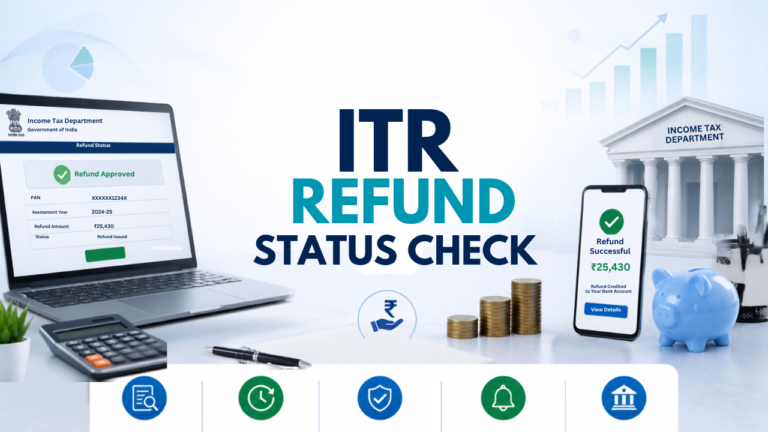
Neha was expecting a refund of Rs. 15,000 for the current year but had an old demand of Rs. 9,000 from an earlier assessment year that she was not even aware of. The department adjusted the old demand and released only the balance of Rs. 6,000. If your refund ever comes in lower than expected, checking for a Section 245 adjustment on the portal is the first thing to do, and my guide on checking your ITR refund status shows you exactly where to look.
Section 133(6): Request for Information
This gives the department power to call for information, books of account, or documents, and it is not always addressed to you directly. Banks, registrars, and other third parties can also receive one about your transactions. If you receive it personally, treat it like a 142(1) notice and respond by the date specified with whatever records are asked for.
Quick Reference: Sections, Deadlines and Where to Reply
| Section | What It Means | Typical Deadline | Where to Reply |
|---|---|---|---|
| 143(1) | Intimation after processing | 30 days if discrepancy shown | e-Proceedings |
| 139(9) | Defective return | 15 days (extendable) | File corrected return |
| 142(1) | Inquiry before assessment | As specified in notice | e-Proceedings |
| 143(2) | Scrutiny notice | Ongoing through assessment | e-Proceedings, with a CA |
| 148 / 148A | Income escaping assessment | 7 to 30 days at show-cause stage | e-Proceedings, with a CA |
| 156 | Demand notice | 30 days | Pay online or appeal to CIT(A) |
| 245 | Refund adjustment | As specified, object if you disagree | e-Proceedings |
| 133(6) | Call for information | As specified in notice | e-Proceedings |
What Happens If You Ignore a Notice
Ignoring any of these does not make the matter go away. If you fail to comply with a 142(1) or 143(2) notice, the Assessing Officer can pass a best judgment assessment under Section 144, based entirely on whatever information is available to the department, usually to your disadvantage. On top of that, a flat penalty of Rs. 10,000 under Section 271(1)(b) applies for each instance of non-compliance.
If under-reporting or misreporting of income is established, Section 270A adds a penalty ranging from 50 percent to 200 percent of the tax on that income. And if you never correct a defective return under Section 139(9) within the time given, the return is treated as if it was never filed. None of these outcomes are worth the short delay it takes to log in and respond.
Will These Section Numbers Change Under the New Income Tax Act 2025?
If you have been following my coverage of the Income Tax Act 2025 versus the 1961 Act, you already know the new Act came into effect on April 1, 2026. Here is the part that matters for notices specifically: assessments and proceedings relating to Assessment Year 2026-27 and earlier continue under the Income Tax Act 1961, since the new Act’s repeal clause preserves all pending and pre-existing proceedings.
In practice, this means every section discussed in this article, 143(1), 139(9), 142(1), 143(2), 148, 156, 245, and 133(6), remains exactly the reference you should use for any notice you receive in 2026. The new Act’s renumbering will only become relevant once assessments for Tax Year 2026-27 begin, which is a matter for next year’s filing cycle, not this one.
Frequently Asked Questions
What is a DIN and why does it matter?
DIN stands for Document Identification Number, a unique code that every genuine communication from the Income Tax Department has carried since October 2019. A notice without one is invalid and you are not required to act on it.
Can I file a revised return after getting a 139(9) notice?
No, a 139(9) notice requires you to file a corrected return specifically in response to that notice, not a revised return under Section 139(5). If you want to understand the difference between the two, my article on belated return versus revised return explains it clearly.
What if I miss the deadline to reply to a notice?
You can request an adjournment through e-Proceedings before the deadline passes, and this is usually granted once. Missing it entirely without asking for more time risks a best judgment assessment and penalty.
Do I need a CA for every income tax notice?
Not for a straightforward 143(1) intimation or a simple document request. For scrutiny under 143(2), reassessment under 148, or any demand you intend to dispute, professional help is worth the cost.
How far back can the department reopen a case under Section 148?
Three years from the end of the relevant assessment year in normal cases, and up to ten years if the escaped income exceeds Rs. 50 lakh.
Will these notice sections change under the new Income Tax Act 2025?
Not for now. Notices relating to AY 2026-27 and earlier continue under the Income Tax Act 1961. New section numbers apply only from Tax Year 2026-27 assessments onward.