Best Tax Deductions for Government Employees FY 2026-27
Government employees in India get access to a set of tax deductions and exemptions that private sector employees simply do not have, and most government employees I speak with underestimate exactly how much this is worth. A private sector employee retiring with the same gratuity or leave encashment as a government employee can end up paying real tax on it, while the government employee pays nothing. This list ranks the best tax deductions for government employees for FY 2025-26, in order of how much money they actually put back in your pocket, with worked numbers so you can see the gap for yourself.
1. Gratuity: 100% Tax-Free, No Ceiling
This is the single biggest advantage on this list. Gratuity received by a government employee at retirement is fully exempt from tax under Section 10(10), with no upper limit at all. Private sector employees get the same exemption only up to Rs. 20 lakh. On a gratuity payout of Rs. 30 lakh, a government employee pays zero tax, while a private sector employee pays tax on the Rs. 10 lakh above the ceiling, roughly Rs. 3,12,000 at the 30% slab. I have covered the full formula and private sector comparison in my gratuity tax exemption guide.
2. Leave Encashment at Retirement: Fully Exempt
Leave encashment received by a government employee at retirement is entirely tax-free under Section 10(10AA), again with no ceiling. Private sector employees are capped at Rs. 25 lakh. On a Rs. 30 lakh leave encashment payout, that is a Rs. 5 lakh gap that stays taxable for a private sector employee, working out to roughly Rs. 1,56,000 in extra tax at the 30% slab, money a government employee simply never pays. See my leave encashment tax exemption guide for the complete calculation.
3. Commuted Pension: 100% Exempt
When a government employee commutes part of their pension into a lump sum, the entire amount is exempt under Section 10(10A). A private sector employee gets this exemption only up to one-third of the total pension entitlement if gratuity is also received, or up to half if it is not. On a large commuted pension, this difference alone can run into lakhs of rupees in tax saved.
4. Section 80CCD(2): Employer NPS Contribution at 14%, Both Regimes
Government employers can contribute up to 14% of basic plus DA to your NPS Tier 1 account, deductible under Section 80CCD(2), and this applies whether you are on the old regime or the new regime. Private sector employees only get the full 14% cap under the new regime, and are limited to 10% on the old regime. This is a deduction that sits entirely outside your Rs. 1.5 lakh Section 80C limit. I have broken down the full mechanics, along with the Tier 1 versus Tier 2 distinction, in my guide on NPS Tier 1 vs Tier 2.
5. Entertainment Allowance: A Deduction Only Government Employees Get
Under Section 16(ii), government employees can deduct the entertainment allowance they receive, up to the lowest of Rs. 5,000, 20% of basic salary, or the actual allowance received. It is a small number in absolute terms, but it is worth flagging because private sector employees get zero deduction on this allowance, the entire amount is taxable for them. This benefit is available under the old regime only.
6. General Provident Fund: Tax-Free Growth for Pre-2004 Recruits
If you joined government service before 2004 and are covered under the Old Pension Scheme, your General Provident Fund contributions, interest, and withdrawal are all tax-free, a genuine EEE structure. Government employees who joined after 2004 are on NPS instead and do not have this option, so this specific advantage applies to a shrinking but still significant group of long-serving government employees.
7. CGHS Contribution Counted Under Section 80D
Central government employees covered under the Central Government Health Scheme can claim their CGHS contribution as a deduction under Section 80D, within the same Rs. 25,000 or Rs. 50,000 overall limit that applies to everyone. It is not an extra deduction on top of your regular 80D limit, but it does mean the contribution that is already being deducted from your salary every month is doing double duty as your health insurance deduction, without you needing to buy a separate policy. I cover the full 80D limits and rules in my Section 80D guide.
8. Section 10(10C): VRS Exemption Up to Rs. 5 Lakh
Government and PSU employees who take Voluntary Retirement can claim an exemption of up to Rs. 5 lakh on the compensation received, under Section 10(10C). This is a one-time exemption, and once claimed under this section, the same amount cannot also be claimed as relief under Section 89 for the same payment.
9. Disability Pension: Fully Exempt for Armed Forces and Paramilitary Personnel
Budget 2026 introduced a full tax exemption for disability pension paid to armed forces and paramilitary personnel who are invalided out of service due to a disability attributable to or aggravated by their service. Both the service element and the disability element of the pension are covered. This exemption is specific to armed forces and paramilitary employees invalided out of service, and does not apply if you retire on ordinary superannuation.
10. Professional Tax Deduction Under Section 16(iii)
The professional tax deducted from your salary by your state government, capped at Rs. 2,500 a year in most states, is fully deductible under Section 16(iii). It is not exclusive to government employees, but it is easy to overlook, and every rupee of it reduces your taxable salary at no extra effort since it is already being deducted at source.
Why These Tax Deductions for Government Employees Add Up to So Much
In my seven years of comparing salary structures across sectors, the pattern is consistent. None of these tax deductions for government employees look dramatic in isolation, a few thousand rupees here, a percentage point there. But stack the uncapped gratuity and leave encashment exemptions against a private sector employee’s ceilings, and the gap at retirement alone can run into several lakhs of rupees, before you even count the annual advantages like the higher 80CCD(2) cap and the entertainment allowance deduction. If you are comparing a government offer against a private sector one, these deductions deserve a proper place in that comparison, not just the headline salary number.
Conclusion
The best tax deductions for government employees cluster around retirement benefits, gratuity, leave encashment, and commuted pension, where the exemptions are uncapped for government employees but ceiling-bound for everyone else. Layer on the NPS employer contribution advantage and the smaller Section 16 deductions, and government service carries a real, quantifiable tax advantage that is easy to miss if you only look at the salary slip. For the complete tax picture that applies to you as a government employee, see my income tax for government employees guide, and for the broader framework, start with my complete income tax guide for India.
Frequently Asked Questions
Do these deductions apply to state government employees or only central government?
Gratuity, leave encashment, commuted pension, and the entertainment allowance deduction apply to both central and state government employees. CGHS specifically is a central government scheme, though several state governments run similar health schemes that qualify for the same Section 80D treatment.
Are PSU employees treated the same as government employees for these deductions?
Not always. PSU employees are generally treated as private sector employees for gratuity and leave encashment purposes, subject to the same ceilings as any other private sector employee, unless a specific notification extends government treatment to them.
Do I need to claim these deductions manually, or does my employer handle it?
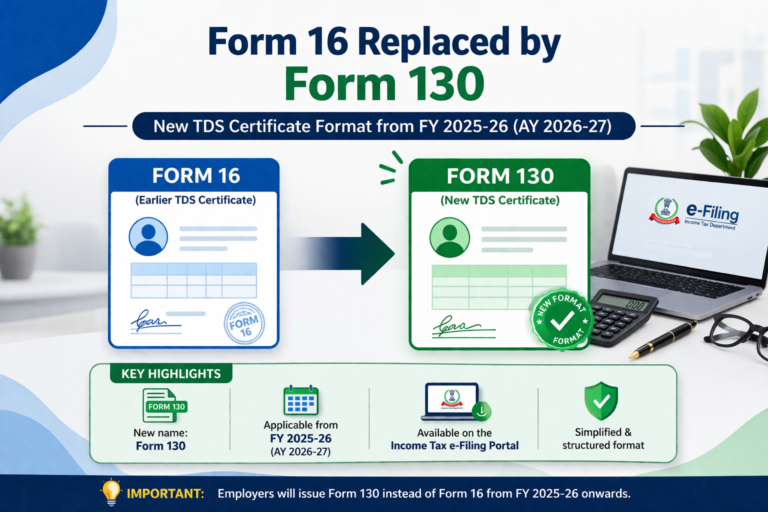
Most of these, including gratuity, leave encashment, and the 80CCD(2) employer contribution, are reflected automatically by your government employer in your Form 130 and salary computation. It is still worth verifying the figures against your Form 130 before filing, since errors in payroll processing do happen.
Which regime should a government employee choose given these deductions?
Retirement benefit exemptions like gratuity, leave encashment, and commuted pension apply regardless of regime. Section 80CCD(2) also applies to both. What changes between regimes is mainly the entertainment allowance deduction and your Section 80C investments, which are old regime only. Run both scenarios using my old vs new tax regime guide before deciding.