New Income Tax Section Numbers: Complete Mapping
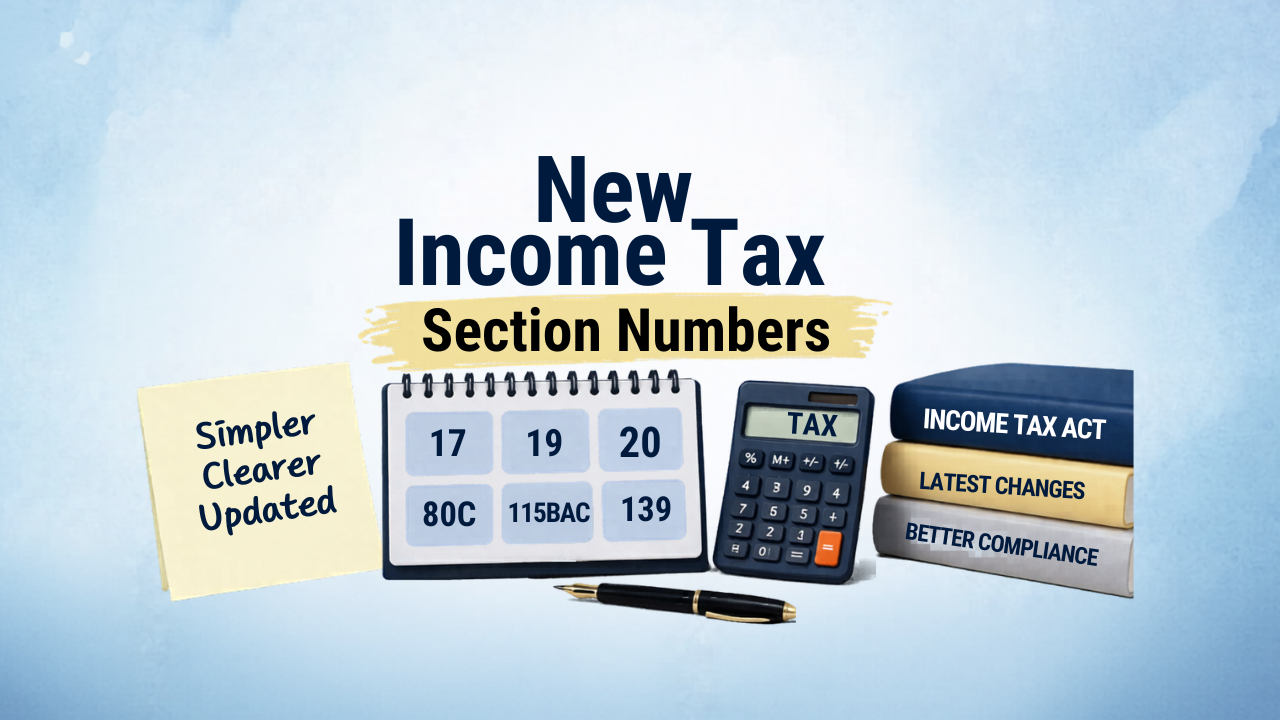
New income tax section numbers have changed completely under the Income Tax Act 2025 which replaced the Income Tax Act 1961 from April 1, 2026. The tax rates did not change. The deduction limits did not change. What changed is the section numbers that govern everything from your salary deductions to your ITR filing.
If you have been filing taxes for a few years, you know Section 80C and Section 24b by heart. From Tax Year 2026-27 onwards, these sections have new numbers. The benefits are identical. Only the reference numbers are different.
This guide gives you the complete mapping of every important old section number to its new equivalent under the Income Tax Act 2025.
Important note before you read further: For your July 2026 ITR filing covering FY 2025-26, you still use the old section numbers. The new section numbers apply only from Tax Year 2026-27 returns filed in July 2027 onwards. Use Tab 1 on the income tax portal for your July 2026 filing.
For a complete understanding of why this distinction matters, see our guide: Tax Year vs Financial Year vs Assessment Year
Why Did New Income Tax Section Numbers Change?
The Income Tax Act 1961 was amended over 4,000 times in 64 years. Sections were added, deleted, and renumbered inconsistently. By 2025, the Act had become extremely difficult to navigate. A single provision sometimes required reading five different sections with cross references.
The Income Tax Act 2025 reorganized everything into a clean, sequential structure. All sections now follow a logical order without alphabetical suffixes like 80C, 80CCC, 80CCD, 80CCE. Everything is a plain number.
The result is simpler language and easier navigation, but it means every section reference you have memorized needs to be updated.
Complete Section Number Mapping: Old vs New
Deductions and Exemptions
| Old Section (Act 1961) | What It Covers | New Section (Act 2025) |
|---|---|---|
| Section 10 | Exemptions from total income | Section 10 |
| Section 16(ia) | Standard deduction for salaried | Section 22 |
| Section 24(a) | 30% standard deduction on house property | Section 71 |
| Section 24(b) | Home loan interest deduction | Section 72 |
| Section 80C | Investments and deductions up to Rs. 1,50,000 | Section 123 |
| Section 80CCC | Pension fund contribution | Section 123 |
| Section 80CCD(1) | NPS employee contribution | Section 123 |
| Section 80CCD(1B) | Additional NPS deduction Rs. 50,000 | Section 124 |
| Section 80CCD(2) | Employer NPS contribution | Section 125 |
| Section 80D | Health insurance premium deduction | Section 126 |
| Section 80DD | Deduction for disabled dependent | Section 127 |
| Section 80DDB | Deduction for specified diseases | Section 128 |
| Section 80E | Education loan interest | Section 129 |
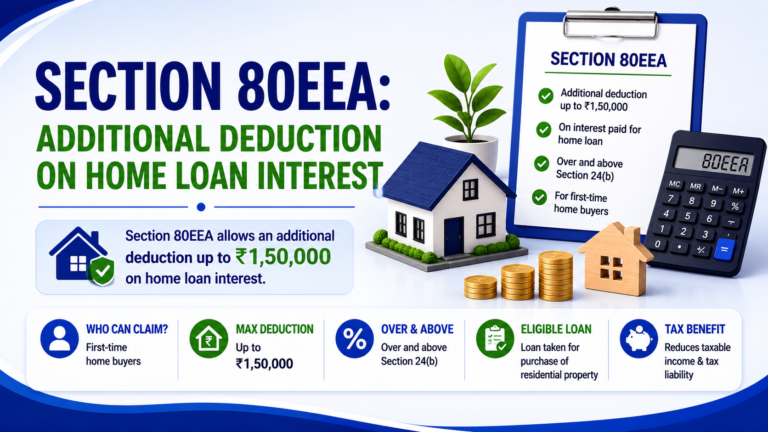
| Section 80EEA | Additional home loan interest for first-time buyers | Section 130 |
| Section 80G | Donations to charitable institutions | Section 133 |
| Section 80GG | Rent deduction for those not receiving HRA | Section 134 |
| Section 80GGC | Donation to political parties | Section 136 |
| Section 80TTA | Interest on savings account up to Rs. 10,000 | Section 140 |
| Section 80TTB | Interest deduction for senior citizens up to Rs. 1,00,000 | Section 141 |
| Section 80U | Deduction for disabled individual | Section 142 |
TDS Sections
| Old Section (Act 1961) | What It Covers | New Section (Act 2025) |
|---|---|---|
| Section 192 | TDS on salary | Section 392 |
| Section 193 | TDS on interest on securities | Section 393 |
| Section 194 | TDS on dividends | Section 393 |
| Section 194A | TDS on interest other than securities | Section 393 |
| Section 194B | TDS on lottery winnings | Section 393 |
| Section 194C | TDS on contractor payments | Section 393 |
| Section 194D | TDS on insurance commission | Section 393 |
| Section 194H | TDS on commission and brokerage | Section 393 |
| Section 194I | TDS on rent | Section 393 |
| Section 194IA | TDS on property purchase | Section 393 |
| Section 194IB | TDS on rent by individual above Rs. 50,000 per month | Section 393 |
| Section 194J | TDS on professional fees | Section 393 |
| Section 194N | TDS on cash withdrawal | Section 393 |
| Section 194Q | TDS on purchase of goods | Section 393 |
Note: Under the new Act, all non-salary TDS provisions are consolidated under Section 393. The rates and thresholds remain unchanged.
ITR Filing and Return Sections
| Old Section (Act 1961) | What It Covers | New Section (Act 2025) |
|---|---|---|
| Section 139(1) | Filing of original return | Section 263(1) |
| Section 139(4) | Belated return | Section 263(4) |
| Section 139(5) | Revised return | Section 263(5) |
| Section 139(8A) | Updated return ITR-U | Section 263(8A) |
| Section 143(1) | Intimation after processing return | Section 277 |
| Section 143(2) | Scrutiny notice | Section 278 |
| Section 144 | Best judgement assessment | Section 279 |
| Section 147 | Reassessment of income | Section 284 |
Advance Tax and Interest Sections
| Old Section (Act 1961) | What It Covers | New Section (Act 2025) |
|---|---|---|
| Section 207 | Liability to pay advance tax | Section 418 |
| Section 208 | Conditions for advance tax | Section 419 |
| Section 209 | Computation of advance tax | Section 420 |
| Section 211 | Instalments of advance tax | Section 422 |
| Section 234A | Interest for delay in filing return | Section 446 |
| Section 234B | Interest for default in advance tax | Section 447 |
| Section 234C | Interest for deferment of advance tax | Section 448 |
| Section 234F | Late filing fee | Section 451 |
Capital Gains Sections
| Old Section (Act 1961) | What It Covers | New Section (Act 2025) |
|---|---|---|
| Section 45 | Chargeability of capital gains | Section 67 |
| Section 48 | Computation of capital gains | Section 70 |
| Section 54 | Exemption on sale of residential property | Section 86 |
| Section 54EC | Exemption on investment in specified bonds | Section 88 |
| Section 54F | Exemption on sale of any asset for residential property | Section 89 |
| Section 111A | STCG on equity at 20% | Section 196 |
| Section 112 | LTCG on non-equity assets | Section 197 |
| Section 112A | LTCG on equity above Rs. 1.25 lakh at 12.5% | Section 198 |
Important Forms: Old vs New Names
| Old Form (Act 1961) | Purpose | New Form (Act 2025) |
|---|---|---|
| Form 16 | TDS certificate for salary | Form 130 |
| Form 16A | TDS certificate for non-salary | Form 131 |
| Form 26AS | Tax credit statement | Form 168 |
| Form 15G | Declaration for no TDS (below 60) | Form 121 |
| Form 15H | Declaration for no TDS (senior citizen) | Form 121 |
| Form 12BB | Investment declaration to employer | Form 124 |
Special Tax Regime Sections
| Old Section (Act 1961) | What It Covers | New Section (Act 2025) |
|---|---|---|
| Section 115BAC | New tax regime for individuals | Section 202 |
| Section 87A | Tax rebate up to Rs. 60,000 | Section 191 |
| Section 89 | Relief for salary arrears | Section 221 |
| Section 89A | Relief for NRI returning to India | Section 222 |
Key Points to Remember
For July 2026 ITR filing (FY 2025-26): Use old section numbers only. The income tax portal Tab 1 uses old Act 1961 references. Your Form 16 for FY 2025-26 will still mention old section numbers.
From July 2027 ITR filing (Tax Year 2026-27): New section numbers will apply. Tab 2 on the portal will be used. Form 130 will replace Form 16 and will reference new section numbers.
Deduction limits are unchanged: Section 80C becoming Section 123 does not change the Rs. 1,50,000 limit. Section 80D becoming Section 126 does not change the Rs. 25,000 or Rs. 50,000 limits. Only the reference number has changed.
Your employer is updating systems: From April 2026, payroll systems are being updated to reflect new section numbers. Your April 2026 salary slip may already show new references. This is normal.
Most Important Section Changes at a Glance
If you remember nothing else, remember these five:
| What You Know | Old Section | New Section |
|---|---|---|
| 80C investments | Section 80C | Section 123 |
| Health insurance | Section 80D | Section 126 |
| Home loan interest | Section 24(b) | Section 72 |
| TDS on salary | Section 192 | Section 392 |
| Standard deduction | Section 16(ia) | Section 22 |
Conclusion
The section number change is a structural update, not a tax change. Your deductions, exemptions, and tax liability remain exactly the same. What changes is the reference number you use when filing returns from Tax Year 2026-27 onwards.
For your July 2026 ITR covering FY 2025-26, stick to the old section numbers. The portal and your Form 16 will guide you correctly on Tab 1.
As per the Income Tax Department, all new section numbers are effective from Tax Year 2026-27 onwards.
Next read: Income Tax Act 2025 vs Income Tax Act 1961 | Standard Deduction FY 2026-27
📚 Also Read: