Section 80D Deduction FY 2026-27: Health Insurance Tax Benefit up to ₹1 Lakh
📅 Last Updated: 29 Apr 2026 | Published: 03 Jan 2025
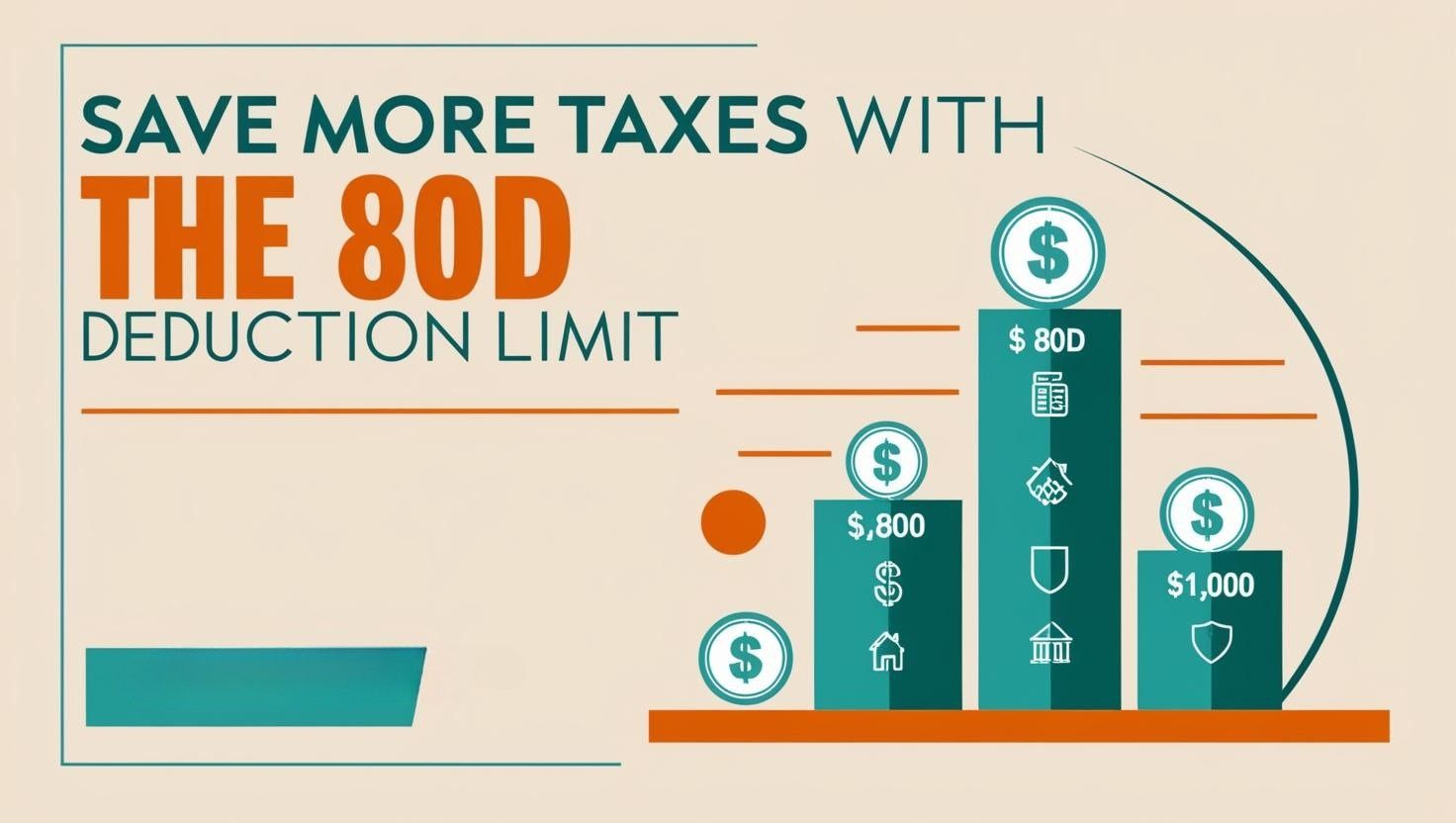
Section 80D lets you claim a tax deduction on health insurance premiums paid for yourself, your spouse, children, and parents – reducing your taxable income by up to ₹1 lakh. This deduction is available under the old tax regime only. Here’s everything you need to know about 80D limits, eligibility, and how to maximise your claim in FY 2026-27.
✅ Section 80D – FY 2026-27 Quick Summary
- Self + spouse + children: Up to ₹25,000 (₹50,000 if self is senior citizen 60+)
- Parents (non-senior): Up to ₹25,000 additional
- Parents (senior citizens 60+): Up to ₹50,000 additional
- Maximum total deduction: ₹1,00,000 (if self + parents both are senior citizens)
- Regime: Old tax regime only – not available in new regime
What is Section 80D Deduction?
Section 80D of the Income Tax Act allows individuals and HUFs to claim a deduction for premiums paid on health insurance policies (Mediclaim). It also covers expenses on preventive health check-ups (up to ₹5,000 within the overall limit). The deduction directly reduces your taxable income in the old tax regime.
Section 80D Deduction Limits FY 2026-27
| Who is Insured | Age of Insured | Max Deduction |
|---|---|---|
| Self, Spouse, Dependent Children | Below 60 | ₹25,000 |
| Self, Spouse (Senior Citizen) | 60 or above | ₹50,000 |
| Parents (Non-Senior Citizens) | Below 60 | ₹25,000 |
| Parents (Senior Citizens) | 60 or above | ₹50,000 |
| Maximum Total (self below 60 + senior parents) | ₹75,000 | |
| Maximum Total (self 60+ senior + senior parents) | ₹1,00,000 | |
What Expenses Are Covered Under Section 80D?
- Health insurance premiums for self, spouse, dependent children, and parents – paid by any mode other than cash
- Contribution to Central Government Health Scheme (CGHS) or approved schemes
- Preventive health check-up expenses – up to ₹5,000 (within the overall limit; can be paid in cash)
- Medical expenditure for uninsured senior citizens: If a senior citizen family member (parent or self, if 60+) is not covered by any health insurance, medical expenses paid for them are also deductible up to the applicable limit
Section 80D Examples – Calculation
Case 1: Self (40 years) + Non-Senior Parents
- Own health insurance premium: ₹22,000
- Parent’s health insurance premium: ₹20,000
- Preventive check-up: ₹3,000 (within own ₹25,000 limit)
- Total 80D deduction: ₹42,000 (₹25,000 own + ₹20,000 parents, preventive within the cap)
Case 2: Self (35 years) + Senior Citizen Parents (65 years)
- Own health insurance premium: ₹28,000 → capped at ₹25,000
- Senior parent insurance: ₹45,000 → allowed up to ₹50,000
- Total 80D deduction: ₹70,000 (₹25,000 + ₹45,000)
Case 3: Self (62 years) + Senior Citizen Parents (85 years) – Maximum Claim
- Own insurance (senior): ₹50,000 → ₹50,000 allowed
- Parent insurance (senior): ₹50,000 → ₹50,000 allowed
- Total 80D deduction: ₹1,00,000 (maximum possible)
Important Rules and Conditions
- Payment mode: Premium must be paid by any mode other than cash (cheque, NEFT, UPI, card). Preventive health check-up (₹5,000) can be paid in cash
- Policy must be in force: Deduction is available only for the year in which premium is paid
- Group insurance: If employer pays your group health insurance premium, you cannot claim 80D for that. Only premiums paid by you qualify
- Dependent children: Children must be financially dependent; independent earning children’s policies don’t qualify
- Old regime only: Section 80D is not available if you opt for the new tax regime
- Single premium policies: If you pay a single premium for a multi-year policy, the deduction is spread proportionately over the policy term
80D vs 80C – Key Difference
| Feature | Section 80C | Section 80D |
|---|---|---|
| What it covers | Investments (PPF, ELSS, LIC, etc.) | Health insurance premiums |
| Maximum deduction | ₹1,50,000 | Up to ₹1,00,000 |
| Combined maximum | ₹2,50,000 (80C + 80D together) | |
FAQs on Section 80D
📚 Also Read:
⚠️ Disclaimer: This article is for informational purposes only and does not constitute tax advice. Tax laws change frequently — consult a CA or tax professional before making decisions.

Written & Reviewed by
Diksha ChawlaFinancial Educator & Content Creator | FinLecture.in
Diksha covers Indian income tax, mutual funds, ITR filing, and personal finance. FinLecture content is cross-checked against official government portals and SEBI/AMFI guidelines.