Tax Planning for Salaried Employees FY 2026-27: Save Up to ₹2 Lakh Legally
Smart tax planning can legally save a salaried employee ₹50,000 to ₹2 lakh+ in income tax every year. The key is knowing which deductions to use under which regime, timing your investments right, and declaring everything correctly to your employer. This comprehensive guide covers the best tax planning strategies for salaried employees in FY 2026-27.
⚡ Tax Planning Checklist – Start of FY 2026-27 (April 2026)
- ✅ Choose your tax regime (new or old) and inform employer
- ✅ Submit Form 12BB with investment declarations by April/May
- ✅ Maximize NPS contribution for 80CCD(2) benefit
- ✅ Verify last year’s ITR is filed and refund received
- ✅ Link Aadhaar to PAN (if not already done)
Step 1: Choose the Right Tax Regime
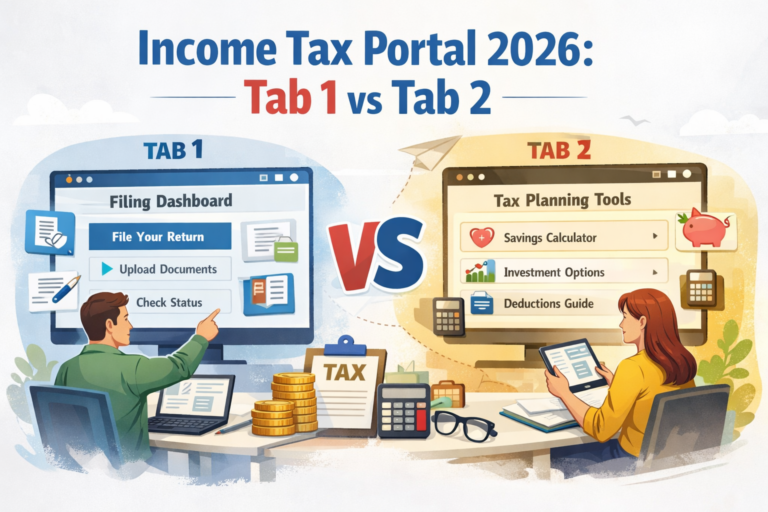
Your first and most important decision is which tax regime to use. The new tax regime (default) is usually better at lower income levels or if you have fewer deductions. The old regime wins when you have significant 80C investments, HRA, home loan interest, and other deductions.
| Gross Salary | Old Regime Better If | New Regime Better If |
|---|---|---|
| Up to ₹12.75L | – | Always (zero tax!) |
| ₹12.75L – ₹15L | Deductions > ₹3.75L | Deductions < ₹3.75L |
| ₹15L – ₹20L | Deductions > ₹4-5L | Deductions < ₹4-5L |
| Above ₹20L | High HRA + home loan + 80C | Most cases without these |
Use the Income Tax Department’s online tax calculator to compare both regimes with your actual numbers.
Step 2: Maximize Deductions (Old Regime)
Section 80C – ₹1.5 Lakh (Best Investments)
- ELSS Mutual Funds: Shortest lock-in (3 years), best potential returns (equity-linked)
- EPF/GPF: Already deducted from salary – count towards 80C
- PPF: Tax-free interest at 7.1%, 15-year lock-in, good for long-term
- NPS Tier 1: Additional ₹50,000 via 80CCD(1B) – above the 80C limit
Section 80D – Health Insurance
- Buy a comprehensive health cover for self + family: ₹25,000 deduction
- Add parents’ health insurance: Additional ₹25,000 (₹50,000 if senior citizens)
- Total potential deduction: ₹75,000 (with senior citizen parents)
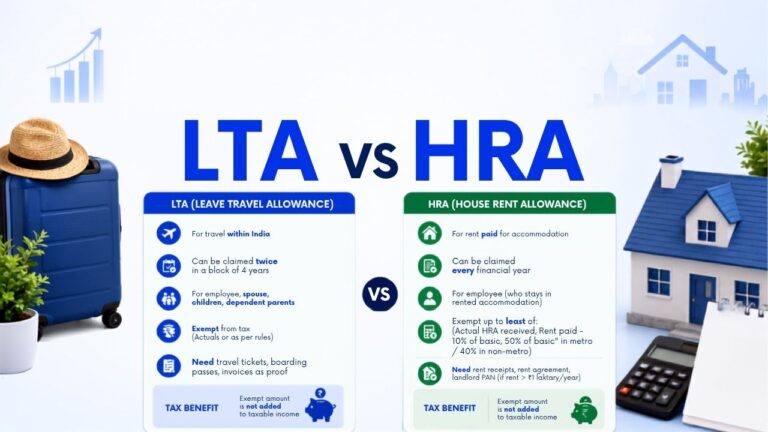
HRA – House Rent Allowance
If you live in rented accommodation and receive HRA, claim exemption under Section 10(13A). The exemption is the least of:
- Actual HRA received from employer
- 50% of basic salary (metro cities) / 40% (non-metro)
- Rent paid minus 10% of basic salary
Submit rent receipts to employer. For monthly rent > ₹8,333, provide landlord’s PAN.
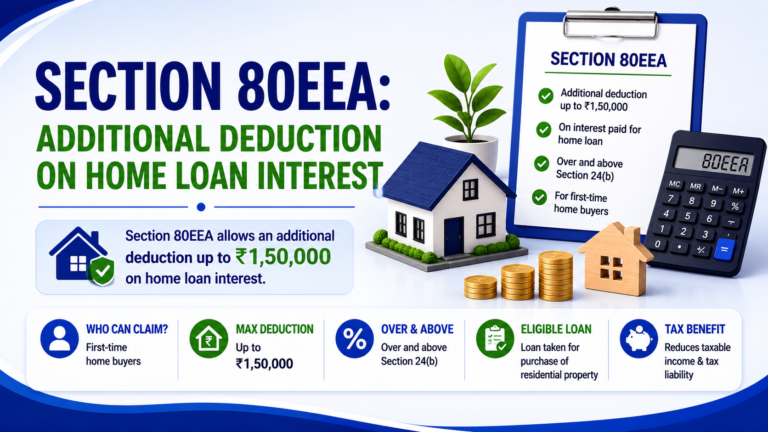
Home Loan – Section 24(b) + 80C
- Interest: Up to ₹2 lakh deductible per year (self-occupied) under Section 24(b)
- Principal: Counts towards 80C limit of ₹1.5 lakh
- Collect interest certificate from lender by April – submit to employer for correct TDS computation
Step 3: Optimize Salary Structure (Work with HR)
Your salary structure significantly impacts tax. Request HR to restructure your CTC to include these tax-efficient components:
- Employer NPS contribution (80CCD(2)): Available even in new regime – up to 14% of basic+DA; tax-free in employer’s hands too
- Food coupons/meal cards: Up to ₹26,400/year is tax-exempt (₹2,200/month)
- Phone/internet reimbursement: Actual expenses reimbursed are tax-free (with bills)
- LTA (Leave Travel Allowance): Exemption for 2 trips in 4-year block – claim with travel bills
- Car allowance: If car used for official + personal use – structured allowance is partially exempt
Step 4: Submit Form 12BB Correctly
Form 12BB is the investment declaration submitted to your employer. Submit it at the start of the year (April) with your planned investments. Key items:
- House Rent (landlord’s name, address, PAN if rent > ₹1L/year)
- Home loan interest – lender’s name and amount
- LTA claim details
- All 80C/80D/NPS investment amounts
At year-end (Jan-Feb), submit actual proofs to HR. If you over-declared, the shortfall will be deducted from your last salary (March TDS). If under-declared, get your employer to adjust TDS.
Step 5: March Planning – Last-Minute Moves
Before 31 March 2027, take these actions to maximize FY 2026-27 savings:
- Ensure PPF, NPS, ELSS, LIC premium payments are complete
- Buy health insurance if not already purchased (premium must be paid, not just applied for)
- Donate to 80G-eligible charities and collect receipts
- Check NPS account – make additional contribution for 80CCD(1B) ₹50,000 deduction (old regime)
- If capital gains from equity MF are expected to exceed ₹1.25 lakh, consider tax-loss harvesting
Common Tax Planning Mistakes to Avoid
- ❌ Buying insurance just for tax – buy it for genuine protection, ensure adequate coverage
- ❌ Ignoring Form 26AS/AIS before filing ITR – always check for discrepancies
- ❌ Missing advance tax deadlines (June/Sep/Dec/Mar) when you have additional income beyond salary
- ❌ Not declaring all income – freelance, rent, capital gains must be reported
- ❌ Choosing regime based on last year’s situation without recalculating for current year
- ❌ Investing in high-commission products (ULIPs, endowment plans) just to save tax – focus on returns
📚 Also Read: