Tax Saving Beyond 80C: 12 Deductions to Reduce Tax in FY 2026-27
Most taxpayers know Section 80C but stop there – leaving thousands of rupees in unclaimed deductions on the table every year. Under the old tax regime, there are more than 15 deductions beyond 80C that can help you reduce your taxable income significantly. This guide covers every major deduction available in FY 2026-27.
Section 80C – The Foundation (₹1.5 Lakh Limit)
Section 80C allows a deduction of up to ₹1,50,000 per year for investments in:
- PPF (Public Provident Fund) – 15-year lock-in, 7.1% interest (tax-free)
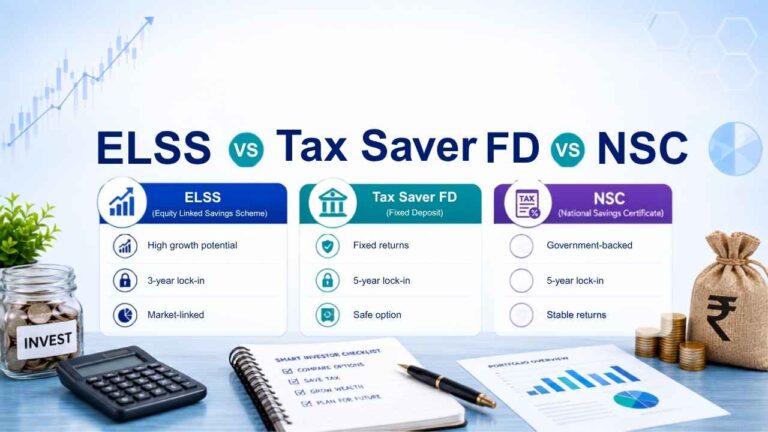
- ELSS Mutual Funds – 3-year lock-in, equity-linked returns
- EPF (Employee Provident Fund) – employer also contributes
- NSC (National Savings Certificate) – 5-year FD with post office
- Tax-saving 5-year FD – with banks/post offices
- Life insurance premium (LIC, term, endowment)
- Sukanya Samriddhi Yojana (for girl child)
- Home loan principal repayment
- Tuition fees for children (up to 2 children)
Top Deductions Beyond 80C – FY 2026-27
1. Section 80CCD(1B) – NPS Additional Contribution: ₹50,000
Over and above the ₹1.5L limit of 80C, you can claim an additional ₹50,000 for your own contribution to the National Pension System (NPS) Tier 1 account. This brings the combined tax-saving deduction to ₹2 lakh (₹1.5L + ₹50K).
2. Section 80CCD(2) – Employer’s NPS Contribution (Also in New Regime)
Employer’s contribution to your NPS account – up to 14% of basic + DA – is deductible. This is one of the few deductions also available in the new tax regime. For government employees, the limit is 14%; for others, it is 10% (pre-Budget 2024) raised to 14% from FY 2024-25.
3. Section 80D – Health Insurance: Up to ₹1,00,000
- Self/spouse/children: ₹25,000 (₹50,000 if senior citizen)
- Parents: ₹25,000 (₹50,000 if senior citizen parents)
- Maximum: ₹1 lakh (if both self and parents are senior citizens)
4. Section 80E – Education Loan Interest: No Limit
Interest paid on a loan for higher education (self, spouse, children, or a student you are legal guardian for) is fully deductible with no upper cap for up to 8 consecutive years from the year repayment starts.
5. Section 80EEA – Additional Home Loan Interest: ₹1,50,000
For first-time homebuyers who took a home loan sanctioned between April 2019 and March 2022, an additional ₹1.5 lakh interest deduction is available beyond the ₹2 lakh under Section 24(b). Check eligibility based on stamp duty value and loan sanction date.
6. Section 24(b) – Home Loan Interest: Up to ₹2,00,000
Interest paid on home loan for a self-occupied property is deductible up to ₹2,00,000 per year. For a let-out property, the entire interest is deductible (no cap) but losses can only be set off against house property income, with remaining losses carried forward for 8 years.
7. Section 80G – Charitable Donations: 50% or 100% of donation
Donations to approved funds and charitable institutions are deductible at 50% or 100% of the donated amount (subject to 10% of adjusted gross total income). PM Relief Fund, National Defence Fund, and certain trusts offer 100% deduction without limit.
8. Section 80GG – Rent for Non-HRA Employees: Up to ₹60,000
If you pay rent but don’t receive HRA from your employer, you can claim a deduction under 80GG – the least of: ₹5,000/month, 25% of total income, or actual rent minus 10% of income. Maximum annual deduction: ₹60,000.
9. Section 80TTA – Savings Account Interest: ₹10,000
Interest income from savings bank accounts (not FDs) is deductible up to ₹10,000 for non-senior citizens. This deduction is only in the old regime.
10. Section 80TTB – Senior Citizen Interest: ₹50,000
Senior citizens (60+) can claim up to ₹50,000 deduction on interest from savings accounts, FDs, RDs, and post office deposits (replaces 80TTA for senior citizens).
11. Section 80U / 80DD – Disability Deductions
- 80U: Taxpayer with disability – ₹75,000 (40-79% disability) or ₹1,25,000 (80%+ severe disability)
- 80DD: Medical treatment of disabled dependent – ₹75,000 or ₹1,25,000 (severe disability)
12. Section 80DDB – Medical Treatment of Specified Diseases
Expenditure on treatment of specified serious diseases (cancer, renal failure, dementia, neurological diseases, etc.) for self or dependents: up to ₹40,000 (or ₹1,00,000 for senior citizens). A certificate from a specialist is required.
Maximum Tax Saving Combination (Old Regime, FY 2026-27)
| Deduction | Max Amount |
|---|---|
| Section 80C (PPF+ELSS+LIC etc.) | ₹1,50,000 |
| Section 80CCD(1B) – NPS | ₹50,000 |
| Section 80D – Health Insurance (self + senior parents) | ₹75,000 |
| Section 24(b) – Home Loan Interest | ₹2,00,000 |
| Section 80E – Education Loan Interest | No limit |
| Standard Deduction (old regime) | ₹50,000 |
| Minimum Guaranteed Deductions (80C+80CCD+80D+24b+Std) | ₹5,25,000 |
📚 Also Read: