Income Tax Act 2025 vs Income Tax Act 1961
Income Tax Act 2025 vs Income Tax Act 1961: What Actually Changed and What Did Not
On August 21, 2025, the President of India gave assent to the Income Tax Act 2025. From April 1, 2026, this new law replaced the Income Tax Act 1961, which had governed India’s direct tax system for over six decades.
Since then, one question has dominated conversations among salaried professionals, freelancers, and small business owners: what exactly changed?
The honest answer, which most articles do not give clearly, is this: the tax rates did not change. The tax slabs did not change. The five heads of income did not change. What changed is the structure, language, section numbers, and certain compliance procedures.
With 7 years of experience in income tax education, I have seen how confusion about new tax laws leads people to make filing mistakes or miss legitimate deductions. This article cuts through the noise and tells you exactly what is different, what is the same, and what it means for your taxes in FY 2026-27 and beyond.
Important for July 2026 ITR Filing: Your ITR for FY 2025-26 (due July 31, 2026) is governed by the Income Tax Act 1961, not the new Act 2025. Old section numbers, old forms, old rules apply for this filing. The new Act applies only from Tax Year 2026-27 onwards. Select Tab 1 on the income tax portal for your July 2026 filing.
The Big Picture: Why Was the Act 1961 Replaced?
The Income Tax Act 1961 started with a manageable structure. Over 64 years, it was amended more than 4,000 times through Finance Bills, standalone amendment acts, explanations, provisos, and notifications. By 2025, the Act had become a labyrinth. Simple questions required navigating through multiple cross-references, provisos to provisos, and explanations that themselves needed explaining.
The Income Tax Act 2025 does not introduce a new philosophy of taxation. It reorganizes, simplifies, and restructures what already existed. The stated goals were:
- Reduce complexity through clearer language
- Eliminate redundant and obsolete provisions
- Reduce litigation through precision in drafting
- Align with digital economy and modern compliance
- Make tax law accessible to ordinary taxpayers
What Stayed Exactly the Same
This is the most important thing to understand before worrying about what changed.
- Tax rates and slabs: Identical under both Acts. The new tax regime and old tax regime rates are unchanged.
- Five heads of income: Salaries, House Property, Profits and Gains from Business or Profession, Capital Gains, Income from Other Sources remain exactly the same.
- Deduction limits: Section 80C limit of Rs. 1,50,000 (now Section 123), Section 80D limits (now Section 124), HRA exemption formula, standard deduction, all unchanged.
- New tax regime vs old tax regime: Both continue to exist. New regime remains the default. Rules for switching remain the same.
- Penalties and offences: Same structure, same amounts.
- Pending assessments and litigation: All proceedings related to income earned before April 1, 2026, continue under the Income Tax Act 1961. The new Act does not affect old disputes.
What Changed: The 10 Most Important Differences
1. Tax Year Replaces Financial Year and Assessment Year
Under the Income Tax Act 1961, every Indian taxpayer dealt with two confusing terms: Financial Year (when income is earned) and Assessment Year (when it is taxed and filed). This created constant confusion, especially when filing returns or responding to notices that referenced AY numbers.
The Income Tax Act 2025 eliminates both terms and replaces them with a single concept: Tax Year.
| Old Term (Act 1961) | New Term (Act 2025) | Meaning |
|---|---|---|
| Financial Year (FY) / Previous Year | Tax Year | April 1 to March 31 when income is earned |
| Assessment Year (AY) | Succeeding Tax Year | Year when return is filed for previous income |
For practical purposes: Income earned April 2026 to March 2027 is Tax Year 2026-27. The return for this income will be filed by July 31, 2027. Simple, single reference.
Impact on you: Minimal for now. Tax portal, Form 130 (new Form 16), and ITR forms will use new terminology from Tax Year 2026-27 onwards. Your July 2026 filing for FY 2025-26 still uses old terminology.
2. Sections Reduced and Renumbered
| Feature | Act 1961 | Act 2025 |
|---|---|---|
| Total sections | 819 (with alphabetical suffixes like 80C, 80D) | 536 (all numerical, no alphabetical suffixes) |
| Chapters | 47 | 23 |
| Schedules | Multiple scattered | 16 organized schedules |
| Rules | 511 rules (Income Tax Rules 1962) | 333 rules (Income Tax Rules 2026) |
Sections like 80C, 80D, 80E with alphabetical suffixes no longer exist. Everything is sequentially numbered. This is why 80C is now Section 123, 80D is now Section 124, and Section 192 (TDS on salary) is now Section 392.
3. Key Section Number Changes: Complete Mapping
| Old Section (Act 1961) | New Section (Act 2025) | Subject |
|---|---|---|
| Section 10 (Exemptions) | Schedules and multiple sections | Income exempt from tax |
| Section 10(13A) HRA | Section 21 | HRA exemption |
| Section 16 Standard Deduction | Section 22 | Standard deduction from salary |
| Section 24(b) Home Loan Interest | Section 24 | Deduction for home loan interest |
| Section 80C | Section 123 | Deductions for specified investments |
| Section 80D | Section 124 | Health insurance deduction |
| Section 80E | Section 125 | Education loan interest deduction |
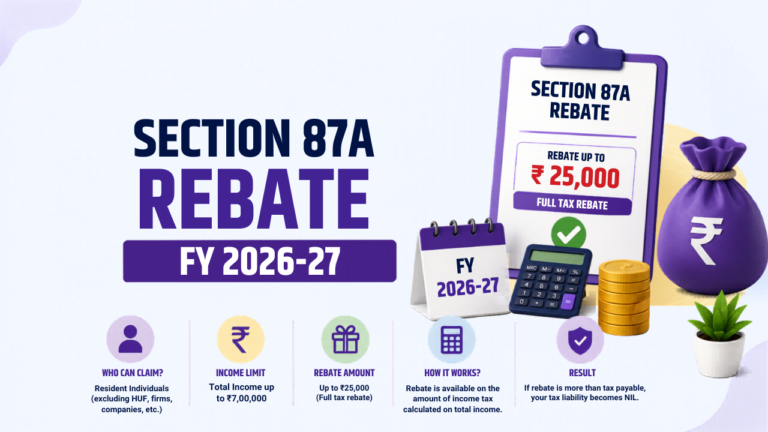
| Section 87A Rebate | Section 156 | Tax rebate for lower income |
| Section 115BAC New Tax Regime | Section 202 | Default concessional tax regime |
| Section 192 TDS on Salary | Section 392 | TDS deduction by employer |
| Section 139 ITR Filing | Section 263 | Mandatory return filing |
| Section 234A Interest late filing | Section 415 | Interest for late filing |
| Section 234B Interest advance tax | Section 416 | Interest for advance tax default |
| Section 234C Advance tax deferment | Section 417 | Interest for instalment shortfall |
| Section 44ADA Presumptive (professionals) | Section 58 | Presumptive taxation for professionals |
| Section 44AD Presumptive (business) | Section 57 | Presumptive taxation for business |
Important: For your July 2026 ITR filing (FY 2025-26), use old section numbers. New section numbers apply only from Tax Year 2026-27 returns filed in 2027.
4. TDS Consolidated from 60+ Sections to 3
One of the most significant structural changes. Under the 1961 Act, TDS provisions spanned from Section 192 to Section 194T, more than 60 separate sections, each with different formats, thresholds, and exceptions. Practitioners had to cross-reference constantly.
Under the 2025 Act, all TDS provisions are consolidated into three sections:
- Section 392: TDS on salary (replaces old Section 192)
- Section 393: TDS on all non-salary income (replaces Sections 193 to 194T)
- Section 394: TCS (Tax Collected at Source)
The rates and thresholds remain unchanged. Only the structure is cleaner. For more details on how TDS on salary works, read the TDS on salary complete guide.
5. Form Numbers Changed
| Old Form (Act 1961) | New Form (Act 2025) | Purpose | When New Form Applies |
|---|---|---|---|
| Form 16 | Form 130 | TDS certificate for salary | June 2027 (for Tax Year 2026-27) |
| Form 16A | Form 131 | TDS certificate non-salary | April 2026 |
| Form 26AS | Form 168 | Annual tax credit statement | April 2026 |
| Form 24Q | Form 143 | Employer quarterly TDS return | April 2026 |
| Form 12BB | Form 124 | Employee investment declaration | April 2026 |
| Form 15G and 15H | Form 121 | Declaration for no TDS | April 2026 |
Your June 2026 Form 16 for FY 2025-26 will still be called Form 16. The rename to Form 130 starts from June 2027. Read the complete guide on Form 16 replaced by Form 130 for full details.
6. Income Tax Portal Has Two Tabs Now
The income tax portal (incometax.gov.in) now shows two tabs when you log in:
- Tab 1: Income Tax Act, 1961 for all filings related to FY 2025-26 and earlier years
- Tab 2: Income Tax Act, 2025 for Tax Year 2026-27 and onwards
For your July 2026 ITR filing (for income earned April 2025 to March 2026), always use Tab 1. Any pending assessments, old notices, or previous year corrections also use Tab 1. Using Tab 2 for old filings is an error.
7. Exemptions Moved to Schedules
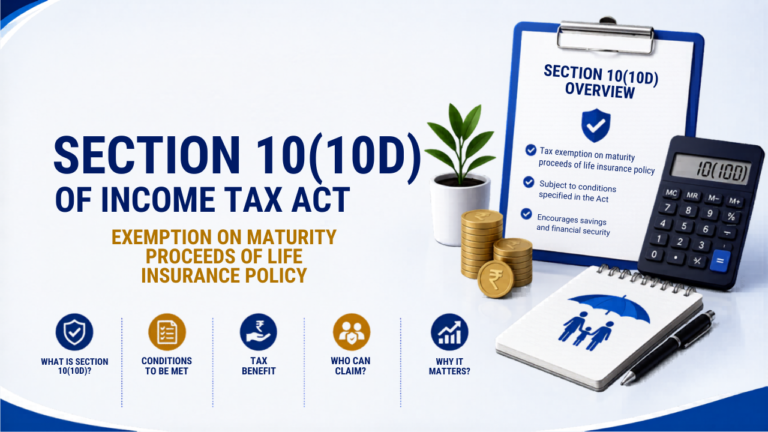
Under the 1961 Act, exemptions were listed under Section 10 with dozens of sub-clauses: Section 10(13A) for HRA, Section 10(5) for LTA, Section 10(10) for gratuity, and so on.
Under the 2025 Act, most exemptions have been moved to dedicated Schedules at the end of the Act. The exemption amounts and conditions remain identical. Only the location within the Act changed.
For practical purposes, the exemptions you claim (HRA, LTA, gratuity, leave encashment) remain exactly the same. Read the complete Section 10 exemptions guide for details on each exemption.
8. Cryptocurrency Now Formally Defined
The 1961 Act added Virtual Digital Assets (VDAs) taxation through amendment but without a comprehensive definition. The 2025 Act formally includes cryptocurrencies, NFTs, and other digital assets in the definition of VDAs and clarifies their tax treatment as capital assets. The tax rate (30% on gains) remains unchanged. The formal inclusion reduces ambiguity for taxpayers with crypto holdings.
9. Digital Compliance Strengthened
The 2025 Act explicitly enables tax authorities wider digital access during search operations. In cases of investigation, taxpayers may be required to provide access to emails, cloud storage, social media accounts, or digital trading platforms if relevant to the investigation. This formalizes what was already happening in practice but creates a clearer legal basis.
Additionally, businesses maintaining electronic books of account must ensure they are accessible from India at all times and that backup servers are physically located in India.
10. Updated Return Window Extended to 4 Years
Under the 1961 Act, updated returns (ITR-U) could be filed within 24 months (2 years) from the end of the assessment year.
Under the 2025 Act, this window has been extended to 48 months (4 years) from the end of the relevant tax year. However, additional tax at increasing rates (25% to 60%) applies depending on how late the updated return is filed.
File your return directly at the official portal: incometax.gov.in
What This Means for Your Day-to-Day Tax Planning
For Salaried Professionals
Your practical tax planning changes very little. The deductions you claim (Section 80C, 80D, HRA, standard deduction), the regime you choose (old or new), and the tax you pay are all unchanged. The only thing that changes from April 2026 is:
- Your employer uses new form numbers in payroll (Form 124 instead of Form 12BB)
- Your salary slip may reference Section 392 instead of Section 192 for TDS
- Your Form 26AS becomes Form 168 in the portal
For maximum tax savings for FY 2026-27, read the tax saving tips for salaried employees guide and the old vs new tax regime comparison.
For Freelancers and Consultants
Section 44ADA (presumptive taxation for professionals) is now Section 58. The limits, eligibility, and calculation method are unchanged. Your ITR form, advance tax deadline, and the 50% presumptive deduction all remain the same. Read the complete guide on income tax for freelancers.
For Small Business Owners
GST is completely separate from the Income Tax Act and is not affected by this change. For income tax purposes, your tax rates, deductions, and compliance requirements remain unchanged. The main practical change is updating your accounting software to reflect new section numbers.
Transition Timeline: Which Law Applies When
| Income Period | Law Applicable | ITR Filing Due | Forms Used |
|---|---|---|---|
| FY 2024-25 (Apr 2024 to Mar 2025) | Income Tax Act 1961 | September 15, 2025 (already passed) | Old forms |
| FY 2025-26 (Apr 2025 to Mar 2026) | Income Tax Act 1961 | July 31, 2026 | Old forms, Tab 1 |
| Tax Year 2026-27 (Apr 2026 to Mar 2027) | Income Tax Act 2025 | July 31, 2027 | New forms, Tab 2 |
| Tax Year 2027-28 and onwards | Income Tax Act 2025 | July 31 of following year | New forms, Tab 2 |
Frequently Asked Questions
Did the Income Tax Act 2025 change tax rates?
No. Tax slabs and rates under both old and new regimes are identical to what they were before. The Income Tax Act 2025 is a structural reorganization, not a tax rate change.
Does the new Act affect my FY 2025-26 ITR filing in July 2026?
No. Your July 2026 ITR for FY 2025-26 is governed entirely by the Income Tax Act 1961. Use Tab 1 on the portal, old form numbers, and old section references.
When does the Income Tax Act 2025 start affecting me?
From Tax Year 2026-27 (income earned April 1, 2026 onwards). The ITR for this period will be filed by July 31, 2027, using new forms and section numbers.
Is Section 80C deduction still available?
Yes. The deduction limit (Rs. 1,50,000) and eligible investments are unchanged. The section is now called Section 123 instead of Section 80C under the new Act. For FY 2025-26 filing, still refer to Section 80C. Read the complete Section 80C guide.
What happened to old assessments and disputes?
All pending assessments, appeals, and proceedings related to income before April 1, 2026, continue under the Income Tax Act 1961. The 2025 Act does not affect old disputes.
Do I need to learn all the new section numbers?
Not immediately. For FY 2025-26 filing (July 2026), old section numbers apply. From FY 2026-27 (July 2027 filing), new section numbers will be used. The income tax portal also has a comparison tool that maps old sections to new ones.
Is HRA still available under the new Act?
Yes. HRA exemption continues under the old tax regime under the new Act. The formula (minimum of 3 conditions) is unchanged. The only update is that 8 cities now qualify for 50% exemption instead of 4. Read the complete HRA exemption guide.
The Bottom Line
The Income Tax Act 2025 is a significant legislative milestone but a modest practical change for most taxpayers. The restructuring is overdue and the simplified language will eventually benefit everyone. But your tax liability, your deductions, your filing process, and your compliance requirements are virtually unchanged for now.
The most important things to remember:
- July 2026 ITR filing: Use Act 1961, Tab 1, old forms
- From July 2027 onwards: Use Act 2025, Tab 2, new forms
- Tax rates: Same under both Acts
- Deductions: Same amounts, new section numbers
- Section 80C is now Section 123. Section 80D is now Section 124. The benefits are identical.
For a complete understanding of income tax including all deductions, ITR forms, and filing process, read the Complete Income Tax Guide India 2025-26 and 2026-27. The new Act was a direct outcome of Union Budget 2025. PAN card requirements were also updated — check new PAN rules 2026 for the latest changes.
Questions about how the new Act specifically affects your tax situation? Drop them in the comments below.
📚 Also Read: